Samoeng Hospital, Chiang Mai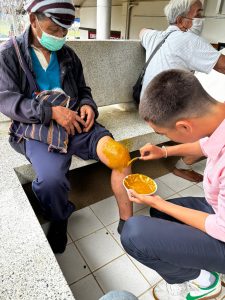
During the summer holidays, I spent 2 weeks shadowing the doctors at Samoeng Hospital, a small district hospital in the mountains of northern Thailand. The hospital serves a wide rural catchment area and, as such, faces significant challenges with limited staff and resources.
During my placement, I rotated through several departments, including outpatients, maternity, and emergency. In outpatients, I observed consultations for chronic conditions such as knee joint problems and hypertension, where the emphasis was often on pragmatic, low-cost management strategies. In the maternity ward, I was able to see how midwives and doctors worked together to provide safe deliveries despite minimal monitoring equipment compared with what would be the standard in main general hospitals in either Thailand or the UK. In the emergency unit, I witnessed how staff triaged cases rapidly, prioritising limited space and equipment for the most urgent patients. Normally minor surgery is not normally carried out at the hospital, however there are times when it is necessary and it illustrated the importance of adaptability, with procedures carried out efficiently despite restricted facilities.
From these experiences, I gained a deeper appreciation for the role of teamwork, resourcefulness, and clinical judgement in rural healthcare, as well as the resilience of both patients and staff in this setting.
Ramathibodi Hospital, Bangkok
I also undertook a day shadowing a Professor at Ramathibodi Hospital, one of Thailand’s largest teaching hospitals. This placement offered a striking contrast compared to Samoeng Hospital. Here, I was based primarily in the orthopaedic department, where I observed outpatient consultations. The cases were highly varied, from routine follow-ups to complex trauma requiring surgical reconstruction, and it was fascinating to see how cutting-edge imaging and surgical techniques were employed to optimise patient outcomes.
I was particularly impressed by how the surgeon prioritised patients’ quality of life and functional ability when discussing treatment options, carefully considering how joint problems affected their daily activities and capacity to work. The emphasis on sub-specialisation meant that patients had access to highly targeted care, and I was struck by how much the availability of advanced facilities changed the rhythm of clinical decision-making compared with my experience in Samoeng.
This placement gave me valuable insight into the benefits of teaching hospitals, not only in terms of technology, but also in fostering an academic environment where junior doctors and medical students learned alongside senior clinicians.
2025 420 Junior European Championships
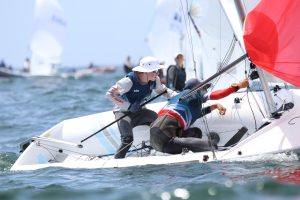 In July 2025, I represented Great Britain at the 420 Junior European Championships in Porto, Portugal, finishing 8th in the British contingent, and 29th in his fleet. The regatta was held in consistently strong winds, which made for challenging but rewarding racing. Before the regatta, our boat was pulled in for a full measurement check, requiring us to strip the entire boat of ropes, blocks, and fittings before reassembling it, which is a demanding process but part of the reality of international competition.
Despite strong preparation both in the UK and on-site, we were frustrated to find that our upwind speed and height were off the pace. Even with solid starts, we struggled to hold a lane off the line and often had to duck large sections of the fleet. That said, we capitalised on our strengths elsewhere: our speed strategy on reaches and downwind allowed us to consistently regain positions, bringing us into the top half of silver fleet despite the setbacks at the starts.
While we were disappointed with our results not being as high as we had hoped, I found it to be a valuable event, reinforcing the importance of adapting under pressure, maximising strengths, and learning quickly in a high-level international field.
Ror Dor Year 3
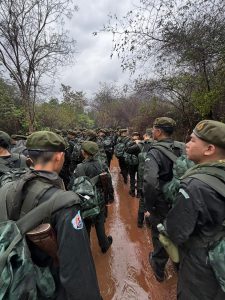 This year I advanced into my third year of Ror Dor (Royal Thai Army Reserve training), a year where the programme took on a noticeably sharper edge. With ongoing conflict and tense standoffs along the Thai–Cambodian border, the training was ramped up to reflect the possibility of real deployment scenarios. Field exercises became more demanding, focusing on offensive and defensive drills such as capturing and holding positions, trench assaults, and clearing operations. We were also introduced to heavier and more technologically advanced weapons like bombs and drones – underscoring the destructive power of modern combat.
As a team leader, I was expected to organise and motivate groups in live field simulations, often under strict time pressure, mirroring the conditions faced by actual soldiers. Discipline was paramount, and the emphasis on readiness brought home the seriousness of national defence when geopolitical tensions are high.
Now, with only a final field training exercise left to complete the programme, I feel the experience has given me more than just discipline: it has provided a grounding in responsibility, leadership under pressure, and an awareness of the sacrifices that come with military service.