
Our Sixth Form cadets from both Bournemouth School and Bournemouth School for Girls play a key role in the running of the CCF, setting an example for junior cadets to aspire to. Last weekend we were able to take a group of eight cadets to Netheravon, Wiltshire, the home of the Army Parachuting Association. Shortly after the end of their Year 12 exams, the cadets gave up their weekend to undertake training and their first static-line parachute jumps.
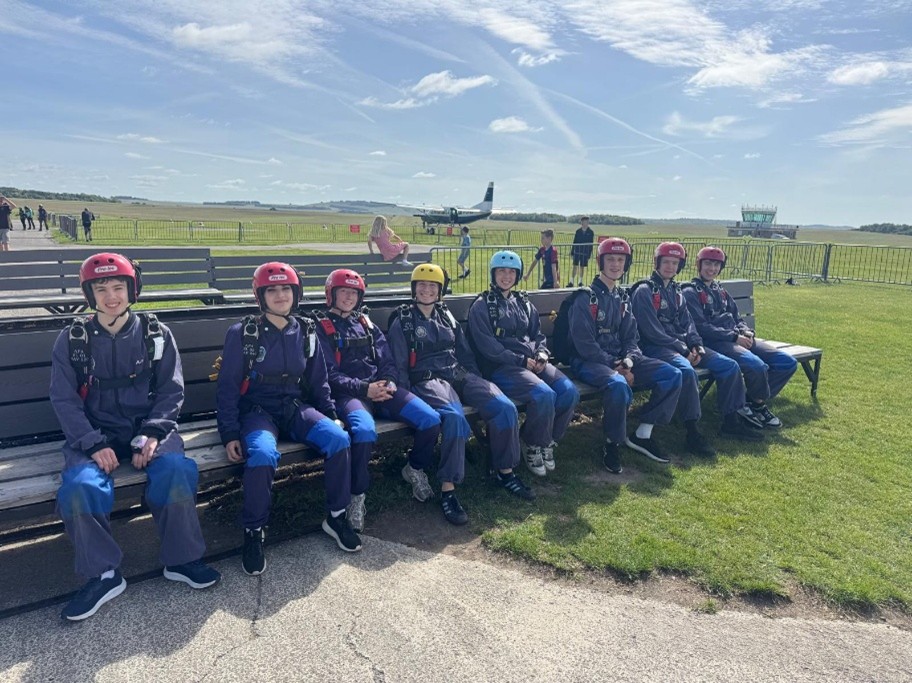 Following a Friday evening of team-building games, the cadets were attentive in the classroom sessions and training activities throughout the day. It does focus the mind when your life, in a few short hours, literally depend on carrying out the drills correctly. In the words of Sgt Andrews, their instructor John made the day’s training “engaging and taught us how to stay resilient in a high-pressure environment.” The motivation of the jump pushed Cpl Stewart “to carry on learning even when things are a bit difficult.”
The word impact is often best avoiding when talking about parachuting; however, the impact of a Combined Cadet Forces Association grant has allowed the cadets to take themselves out of their comfort zone and rise to a new challenge. Without the award of the grant, we would not have been able to run the trip. Sgt Walshe and SSgt Flor-Vickers both said that the grant gave them “the opportunity to try something new.”
After this weekend, it fair to say the cadets gained a different perspective on life: after the door opens and you shuffle toward the edge of the plane, the ground rushing by, you wonder if this was the best idea you have ever had.
There is immense satisfaction in witnessing young people stretch themselves. Sadly, the wind was too strong by the evening, so the cadets had a nervous wait over Saturday night; the bravado of the day before was replaced by nervous laughter at breakfast. By the time the NCOs were in their jump suits and on board the aircraft, it was time for quite introspection, each of them replaying their drills. As the plane gained height, they were in the safe hands of the dispatcher, Rory.
Watching from the ground, it crosses your mind as to whether they are all going to take the plunge; however, throughout the weekend, the cadets could take confidence from the inspiring example of our contingent’s SSI, SSgt Wallis. As a former member of the Red Devils, the Army’s Parachute Display Team, with more the 4,000 jumps to her name, she was always on hand with words of advice and support.
There can be few greater contrasts than what happens after leaving the plane. Initially, your adrenaline spikes, until your parachute jerks open. Then, just seconds later, you are drifting in silence, with just the crackling voice from the radio to remind you are not entirely on your own. All too soon, you have reached 1,000ft and it is time for you to go through your landing sequence. RQMS Ramsay and RSM King both remarked how the jump pushed them out of their comfort zone.
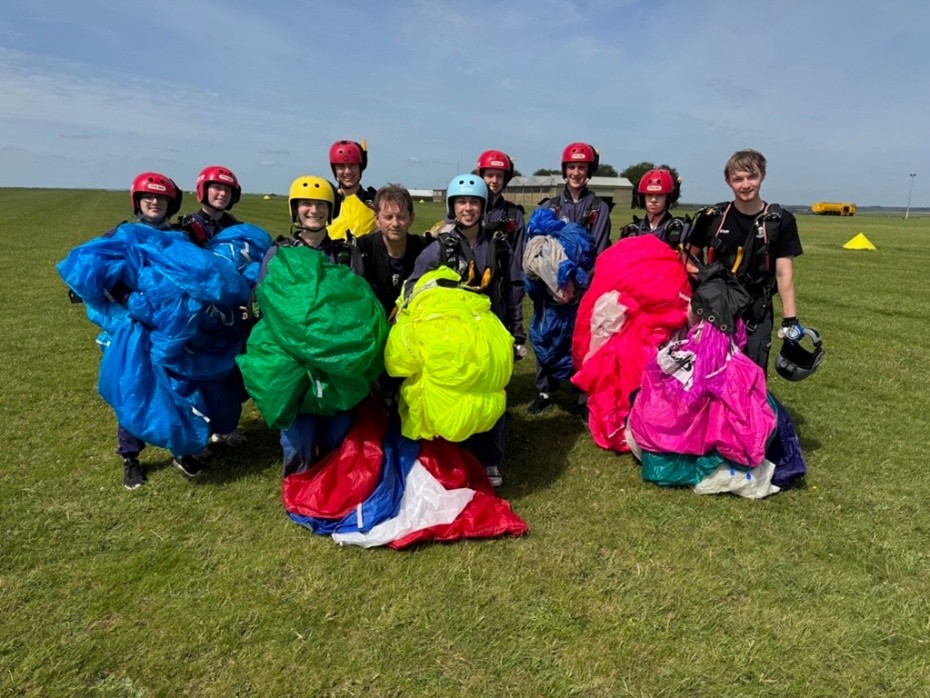
Observing the canopies open, we were wondering who was going to get closest to the arrow marking the aiming point. As each came into land, the smiles on each of their faces are a testament of experience they have just had. As LCpl Shopland said, “I felt apprehensive when I was in the plane, but when I got to the door I couldn’t wait to jump, something I wouldn’t have experienced if I quit first.”
With the training and first jump behind them, the cadets can come back for further jumps to maintain their skills. In the minibus back to school, we asked our cadets if they were planning another jump. Rather than cries of “Never again!” they were already researching Netheravon.
Lt Barry Smith, Head of Army Section