
Attendance Matters
Most families want the best for their children and attending school every day, on time, is one of the most powerful ways to support learning and progress. If anyone were to get 90% in a test or exam there would be no doubt that this is a fantastic result, but unfortunately the same does not apply when it comes to school attendance, which can have a significant impact over time.
In this article, we will take a look at what attendance percentages really mean, when it’s acceptable to keep our child home sick, and why being on time matters more than you might think.
Why school attendance matters
Every school day counts. When children miss lessons – even just occasionally – they miss out on key parts of learning, which can be hard to catch up. Also, whilst they may be able to read up on what they missed and prove to be very conscientious at home, there is no substitute for being in the lesson, listening to an experienced, knowledgeable teacher.
Since the pandemic, there has been an increase in school absence rates nationally and, even though the data suggests that there has been some progress with this, there is still a long way to go. Particularly, nationally, there has been a concerning rise in persistent absences, which have nearly doubled since the pandemic – this refers to any student missing more than 10% of school days.
What does 90% attendance actually mean and does this really impact academic attainment?
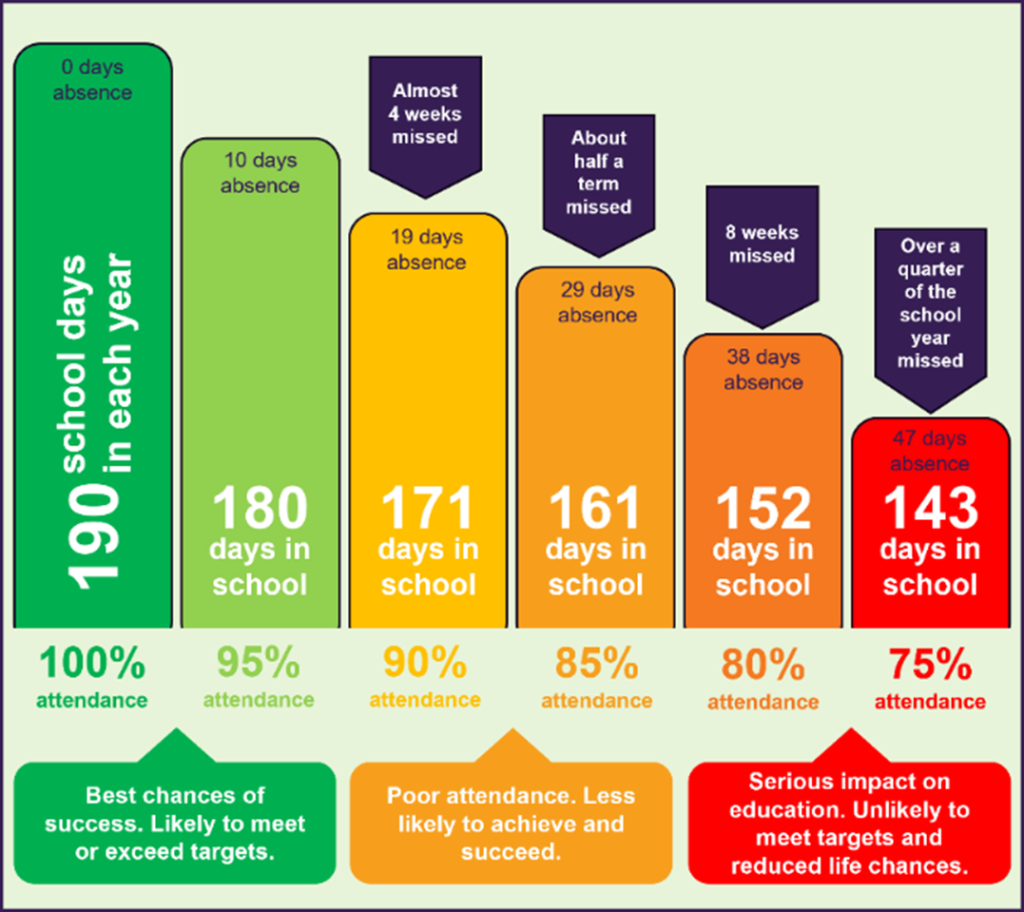
Whilst in most circumstances 90% is a solid grade and not usually cause for concern, when it comes to attendance it tells a different story. The Department for Education classify this as persistent absenteeism.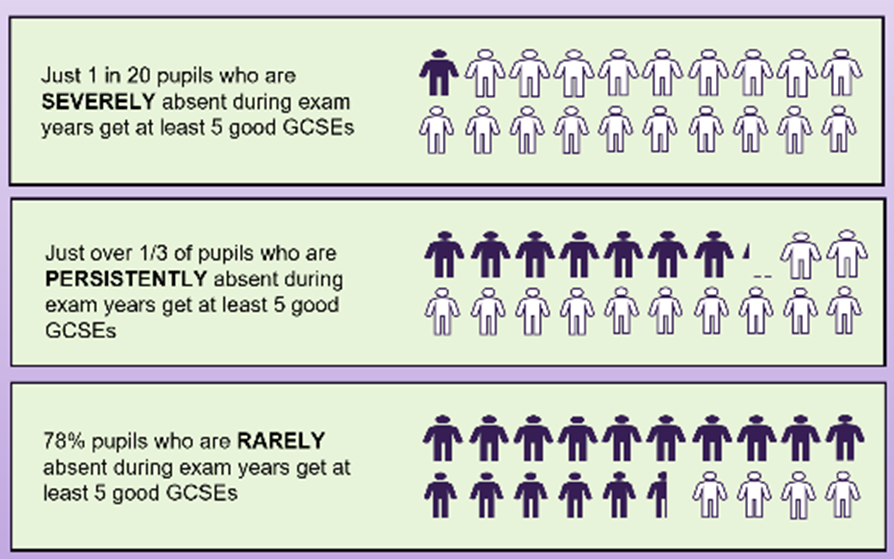
Missing only 10% of school equates to around 1 day off every 2 weeks or half a day missed every week – would you be able to miss this much work every week? This equates to 19 days missed over the school year, which is nearly 4 full weeks of learning missed.
As the image here shows, this impact dramatically increases with more time missed.
If you apply this over your child’s 5 years of secondary school (years 7 to 11), 90% attendance equates to half of an entire school year missed.
Unsurprisingly, this kind of regular absence – even if it’s just a day here and there – can have a serious impact on academic attainment.
There is extensive research to support this, with studies showing that missing just 17 days over the course of a school year is linked to students achieving one grade lower than expected in their final exams.
Too sick or not too sick? Should my child go to school?
We understand that illness is sometimes inevitable and, in some cases, keeping your child home is the right thing to do. However, keeping in mind the importance of ensuring they attend regularly, it is important to ensure they are only off when absolutely necessary to minimise the impact of academic attainment as much as possible. A useful guide can be to ask, “If I had these symptoms, would I feel well enough to go to work?” If the answer if yes, your child may well be fit for school too.
With that being said, if you need more advice, the NHS has released this advice. (See also this poster from the NHS.)
If you are ever in doubt about whether you should send your child into school, you can always call the school and ask for advice.
In some situations, for example with coughs, colds and headaches, these symptoms can often be managed with pain relief of medication. Students are welcome to bring medication into school providing a signed medical form is also handed into school, so staff can administer further medication if needed; this is also the case for prescribed medication.
In instances of long-term illness or injury, it is important to keep the school informed, as we may be able to put other measures in place that increases their ability to attend school.
Absence linked to illness is normally recorded as illness, which is an authorised absence. Whilst this is authorised, please note that it is still recorded as an absence and so will still contribute towards your child’s overall attendance mark.
When anxiety affects attendance
We know that not all absences are due to physical illness. For some children, anxiety about school can be a very real barrier to attending and this is something we take very seriously.
School related anxiety can show in many different ways:
- Feeling sick or having stomach aches before school
- Trouble sleeping on school nights
- Avoiding certain lessons
- Becoming upset or withdrawn in the mornings
It may feel natural to let them have a day off here and there to make them feel better in the moment. Whilst this will likely make them feel better and less anxious that day, it is important to note that this should not be a long-term solution and will likely heighten their anxiety about school further and make it harder to get them in; in the long run, it can unintentionally reinforce the anxiety. With this in mind, it is important to try to maintain their normal school routine as much as possible and continue encouraging them to go to school, even when they feel they cannot possibly do it.
The earlier we can help, the better. If your child is showing signs of anxiety that are affecting their attendance, please let us know and we can try and help.
 The hidden impact of being late
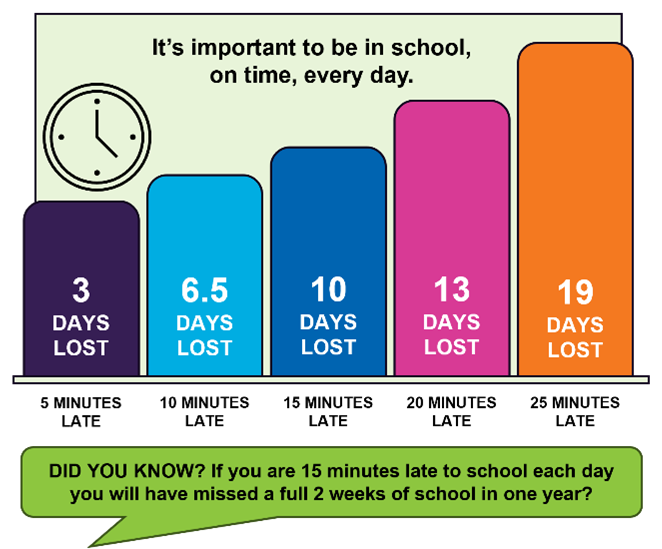
It is very easy to think that arriving 5 or 10minutes late won’t matter, and thus not allow that extra traffic time in the morning. Unfortunately, this is not the case and the minutes do add up!
When students arrive late, they may:
- miss instructions or important information
- feel rushed, unsettled, or left behind
- interrupt the flow of class
Over time, being frequently late can impact learning just as much as being absent.
As shown in the image here, being just five minutes late every day equates to losing three days of school; being 20 minutes late equates to nearly three full school weeks missed.
How families can help?
- Build routines: consistent bedtimes and morning habits make mornings smoother.
- Plan ahead: get bags, clothes and lunches ready the night before.
- Bring medication: bring medication to school if that will help manage your child’s symptoms and allow them to attend.
- Talk about school positively: encourage your child to value their time in class and the importance of attending school (even if they don’t want to!).
- Communicate with us: if there’s a challenge or circumstances affecting attendance or punctuality, please let us know. We’re here to help!
Together, we can make every day count!
Good attendance and punctuality set students up for success – both in school and beyond. Thank you for continuing to support your child’s education by making sure they arrive every day, ready to learn.
If you have any questions or need support around attendance, don’t hesitate to contact the school office, your child's Head of Year or form tutor.